Have you ever noticed that during the times of greatest turbulence and turmoil that people are most sparked into action to come together in support of one another? As someone who has led a career in Community Animation, I often find myself drawn to pay close attention to how people organize and uplift each other when tragedy strikes – whether it be political turmoil like we’ve seen recent weeks igniting our patriotism as Canadians, social injustices that rally crowds in protest, or even personal tragedies that find support through crowd funding campaigns.
It’s inspiring and good medicine for my soul to take notice and remember how good people are naturally compelled to reach out with support, kindness, generosity and care when disaster strikes. Recently, I’ve been relieved with how people are gaining awareness and understanding that food insecurity is a real emergency. One that requires us to build community connections that support our local area growers and consider developing skills to learn how to grow too – whether just beginning or scaling up efforts for those with more experience.
It’s been a thought churning around in my head over the past year since returning city life that the lessons I learned from a decade of living in a rural and remote island community were invaluable to addressing the larger scope of global issues like poverty, mental health, food insecurity, economic crisis or climate change. That small scale solutions are what we need. What I experienced in a micro-environment of 20 square kilometres of land mass with a population of 1300 people taught me how to embrace being a part of both the giving and receiving of care in a tight knit community in a way I was blessed to experience. It’s harder to replicate in a city setting but just as necessary both for the well-being of my family and for the community as a whole.
Perhaps what I found most comforting in the time I lived on Mayne Island was that it was *plausible* that this speck in the sea could (if the situation ever arose that it was cut off from the rest of the world) sustain itself in a way that most places couldn’t, and for reasons that were less about the land to grow food on and more about the people and how we collectively embraced and cultivated community together.
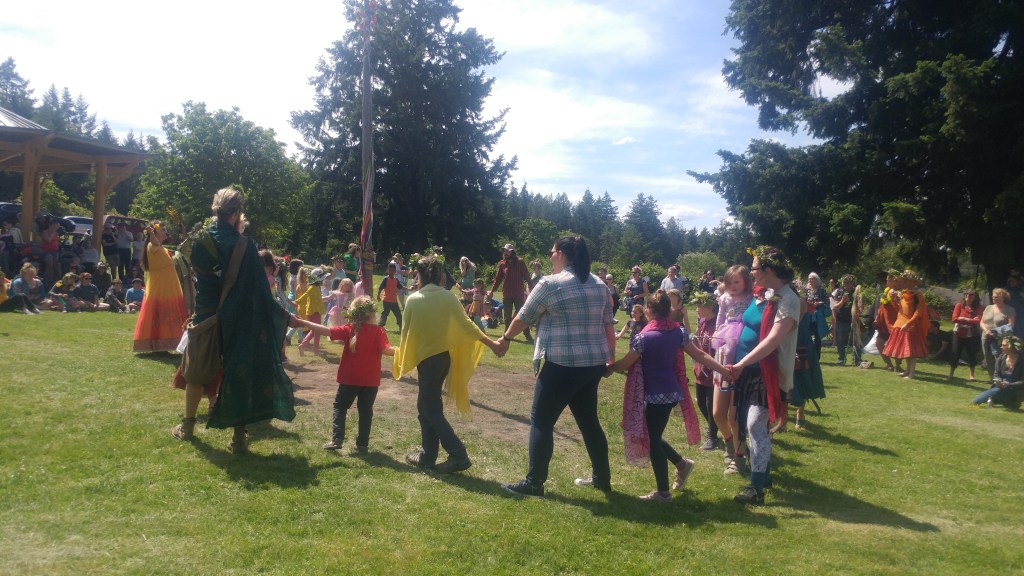
Island life inherently creates familiarity and connection with neighbors. When you see the same people on a regular basis, which is unavoidable where there is only a handful stores to shop in and community spaces to gather in, people are no longer nameless passersby like is expected in urban areas. In time you realize what a precious and wonderful gift it is to go to the Saturday market not just to shop for locally grown food and handmade wares but also to exchange hellos and converse about local happenings with people just as interwoven into the fabric of community. To feel like you are a thread of a blanket of warmth that gives comfort to all who are a part of it. People integrated within a community know that generosity and giving their time, money or effort towards causes that bring benefit to their neighbors is also a benefit to themselves. That we accomplish so much when we work together, and we find safety in the way people show up for each other during difficult times on both a personal and community level.
What also made Mayne Island such a wonderful place to grow in understanding my own capacity to contribute to local food security was the natural landscape, rich in both agricultural land and dense forests that drew in people with a particularly strong reverence for the earth. When COVID hit and I started up a little seedlings road stand, I couldn’t have expected how popular it would become and what a lifeline it would become for both me and my customers during a time that was otherwise lived in the isolation of our garden. People coming to pick up plants from my gate was perhaps what saved me from the depression I know so many felt while the world we once knew was thrown into chaos.
Being in the city again leaves me craving those close community connections but when you move somewhere new, it takes time to cultivate that sense of belonging again, and it is more challenging in an urban environment – but not impossible. This transition is also reminding me that the skills I’ve developed to network and find people who share similar goals and values to join with in collaboration are actually teachable, and important to share.
If I could give any advice to people who might be thinking more deeply about what it really means to navigate building stronger, more resilient communities in the face of urgent food crisis, here are a few thoughts I hope will be helpful encouragement.
Assess the Lay of the Land
Any time I’ve relocated to a new community, whether a big city like Toronto or a small island like Mayne, the first thing I do is dive into researching what already exists. It fills my soul with encouraging motivation to know that there are already organizations doing great work to provide support and opportunities to get involved. For example, I’ve been really excited about all the upcoming Seedy Weekend events where I know I am going to meet lots of other local folks who are as wildly passionate about growing food as I am. I’ve also used local area Facebook groups to express my interest in sharing growing space and skills with my neighbors and have been making new connections this way.
Plant Seeds of Intention
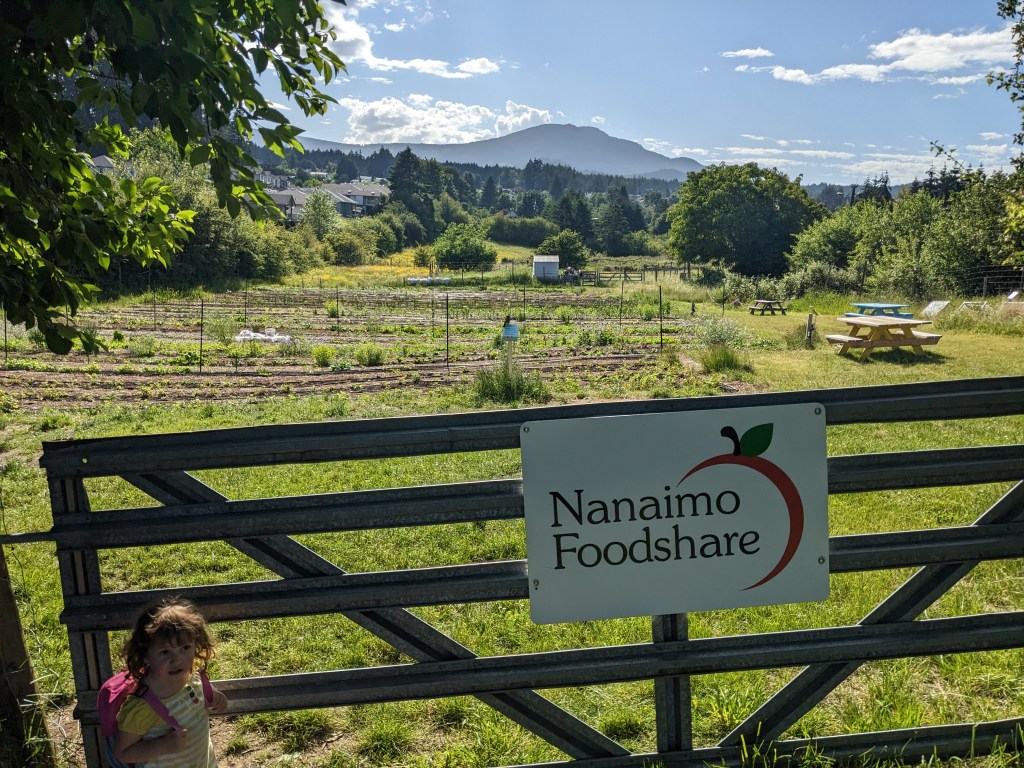
When I arrived in Nanaimo I was quick to pick up on the incredible urban agriculture scene here including an urban farm right around the corner, and as I found opportunities that felt aligned I reached out to introduce myself and express interest in getting involved. I know it’s not always easy for people to feel comfortable in taking that step to reach out into the unknown but in my experience, organizations are warmly welcoming to newcomers and happy to share more about their work and ways to participate.
Nurture Connections and Relationships
Volunteering has always been a most effective tool for me to meet new people and build connections. Even as a busy Mom with three kids that take up most of my time and effort, I still find ways to contribute to the community because I know that the investment of my time is always rewarding. I hear people say that they just don’t have time and I get why people feel that way when sometimes just getting by is demanding enough. But once you really begin to experience how contributing creates opportunities to ACCESS support just as much as the effort to GIVE support, it becomes essential to find ways to help where you can. It doesn’t always have to be a long term commitment either. Sometimes helping spread the word about an event, or show up for a few hours to help with a task can make a real difference to the people leading a project or initiative.
Embrace the Harvest of Abundance
It worries me how often I see people in struggles but they are too afraid to ask for the help they need. I’ve been guilty of this at times too, and been lucky to have people in my community recognize the need for support even when I was afraid to admit it. Sometimes we convince ourselves that our individual problems are a burden or that we are somehow meant to struggle alone. It also seems that often, the people most willing and happy to give support are the ones shy to ask for it when they need it. It matters to both acknowledge when we need support ourselves and to notice when people in our community may need help that is hard to ask for. Don’t be afraid to ask for help. Don’t be afraid to ask people if they need help.
Try Something New and Embrace Failures
When I first started gardening I had no idea what I was doing. Most of what I planted the first year didn’t live long enough to harvest and by all measures I think I would have been justified in calling it quits and never planting a seed again. But with failure comes experience, and the more I was willing to fail, the easier it became to reach success. Nobody starts something new as an expert. Reminding ourselves that the path to growth sometimes means being buried by catastrophe can help lessen the pain when things don’t go as we might have hoped.
Create Spaces for Ideas to Flourish
While I haven’t reached this stage yet here in Nanaimo, I do eventually hope to get back to organizing events that bring people together for discussion and collaboration. In 2023, I recognized how the upheaval throughout COVID lockdowns had impacted the nonprofit organizations on Mayne with many of them seeing a significant turnover in leadership and a changing landscape of what islanders needed to thrive. It felt like we needed a boost to reconnect after isolation so I began hosting “Community Connections Breakfast” meetings and invited board members from all the societies to come together to network and collaborate on pressing community issues. Hosting just a few events myself became a catalyst for others to take the lead on formalizing a community network now known as the Mayne Island Collective which is still thriving and collaborating to address community issues and organizing events that bring the community together.
These are just a few of my initial thoughts on this as I watch in wonder at the converging pressures that are igniting people to think more seriously about what food security means and how to be a part of addressing the concerns that we face as a society. It’s one thing to post on social media that we recognize the need for change, but doing the work to engage in our communities to build connections and systems of mutual support is a long-term strategy that needs all hands on deck.
How are you rethinking what food security means to you? Does your community have outlets to get engaged with growing food? Join us in creating a community of food security advocates and growers at Let’s Get Growing Canada! Facebook group.


 Garden Mama Growing
Leave a comment