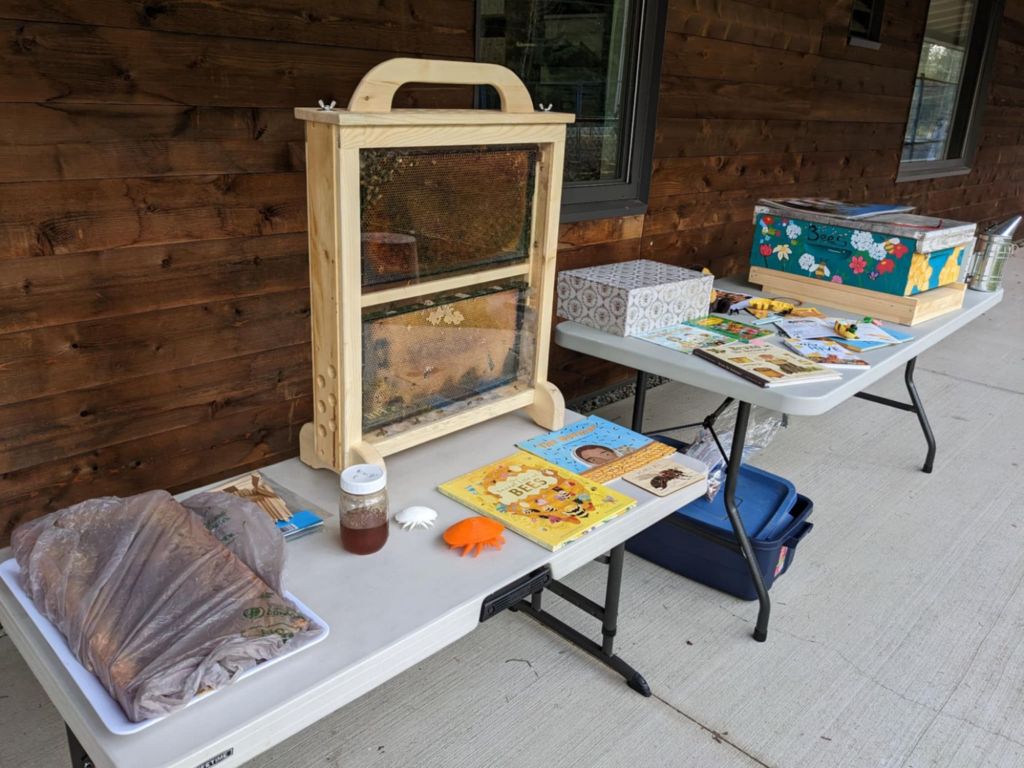
While bees have always intuitively been welcome friends in the garden, and no doubt their role in pollination is an important one for food security, I had never really thought too much about beekeeping as a practice until recently meeting fellow gardener and apiarist Lucienne Siedlecki of Rosebay Bees. We connected over a post in a local Mom group – she was looking for seeds for her children’s school garden, and I just happened to have an excess – and this has led us to keep in touch over our shared passion for kids growing food. Recently I invited her to talk more with me about her love for the bees to write and share her story about how she is bringing bees into classrooms to inspire children in understanding pollinator stewardship.
Lucienne grew up in the lower mainland where over the years her parents had kept gardens – her mother mostly ornamental flowers and her father tending backyard veggies – but she said she never really got too involved in their efforts. It wasn’t until years later as an adult that the interest in bees developed into a curiosity that would lead to a lifestyle where they play an important leading role. It wasn’t long after having children that she moved from the lower mainland to a larger property in Nanaimo that she finally took the plunge and purchased her first colony expecting them to be fairly self sufficient and that her involvement would be minimal. She learned quickly, as the bees either died or flew away from the hive not long after, that there was more she needed to learn. In her own words, “There is no one way of beekeeping. You need to learn by doing, and I learn best by failing miserably, and so I did. I failed miserably. And I continue to fail miserably at lots of things, and that’s how I learn best.”
Before her second attempt she decided she needed to learn more and took a free introductory beekeeping course offered by the Province of British Columbia taught by leading apiculturist Paul van Westendorp. This led to more classes and more learning over the years to evolve into an experienced and more successful bee steward. Over the past 7 or 8 years she has managed to keep between four and ten colonies each year, with each colony being home to around 40,000 bees in the peak of the season.
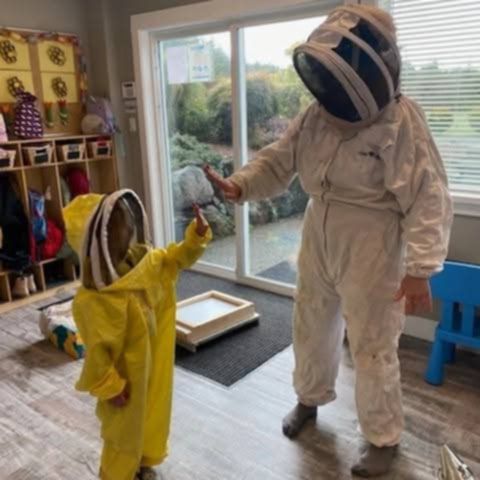
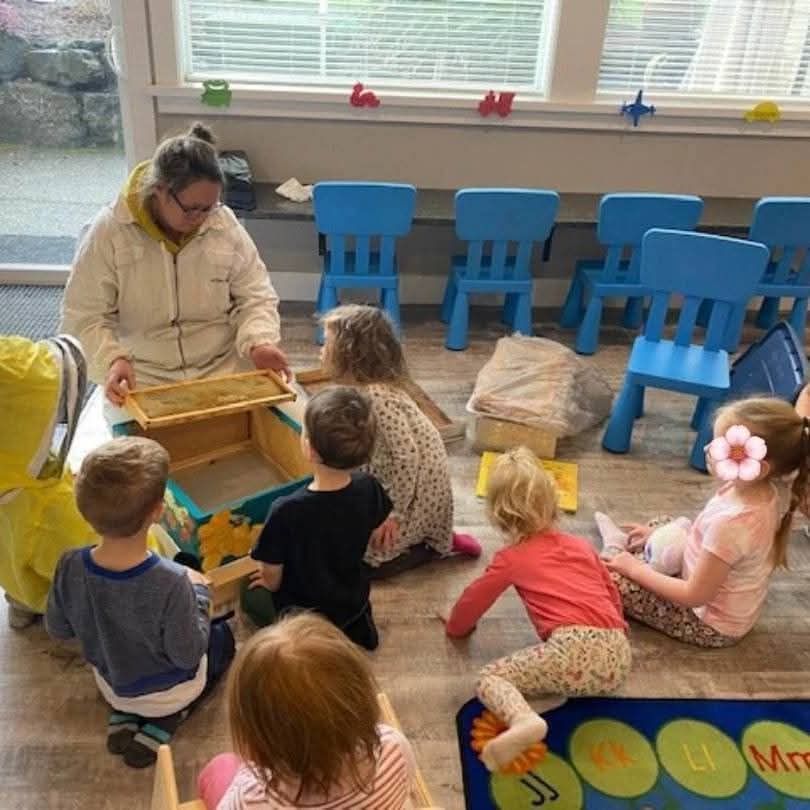
However, beekeeping has been a growing side hobby to her everyday job of teaching music in elementary schools. It wasn’t until her children started attending daycare and conversations during pickup and dropoff with her childcare provider led to a discussion about bringing the bees in for a visit with the kids. Lucienne was happy to oblige their interest and it came naturally to transition her teaching skills from music to bees. She loves “opening up this conversation around how bees are not scary and we need them and let’s not kill them, and let’s think about the environment around us.”
What started as just a fun way to share her love of bees with her kids daycare blossomed into Rosebay Bees, where she now offers her bee visits to daycares and classrooms around Vancouver Island. In the coming weeks she has plans arranged a full day of visits in Lake Cowichan classrooms and a workshop where her children now attend at Nanaimo Christian School to show the kids how to harvest the honey from the hive. Along with her teaching, she is also gifts and sells the proceeds of her helpful bees in the form of candles, honey, lip balms, salves, and propolis tincture, mostly on Facebook marketplace but has tried as a market vendor on a few occasions. This coming weekend she will be offering a workshop, Kids and Bees! with Lucienne Siedlecki, at Nanaimo Seedy Sunday and her husband and children will be tending her vendor booth.
As our conversation progressed, I was curious to understand the challenges that face the bee populations on Vancouver Island, and was quite shocked to learn how hard it is to effectively keep them alive here, especially throughout the winter months. In her most recent inspection of her hives, she suspects that only two of the eight colonies she went into the cold months with have endured and show signs of still being alive, although it has been a hard time of year to check. The reasons for this can be hard to pinpoint as there is a lot about the Vancouver Island climate that presents challenges for the bees. She explained to me that the lack of flowering resources in our mostly evergreen terrain, the cold and damp climate, parasites and varroa mites, and impacts of colony collapse disorder are among the concerns to be mindful of for anyone attempting to provide care to the bees.
In good news, the surviving colonies need to be divided in spring or they risk swarming and leaving so she hopes to start spring with at least four colonies. Lucienne has also joined the Nanaimo Beekeepers Club which runs a switchboard for emergency bee calls and dispatches the closest available apiarist when swarms end up in unexpected and unwanted places in the community. This is most common in May and June and has helped her increase her colonies by rescuing rogue swarms, calling it “an adventure” to try and convince the bees to come home with her. She has also started extending her bee stewarding skills to local farmers like Big Bang Cider, where during a visit to the orchard she casually asked what they were doing for beekeeping and unintentionally landed herself another role in helping to figure out how to source and manage the onsite bees for the critical pollination period.
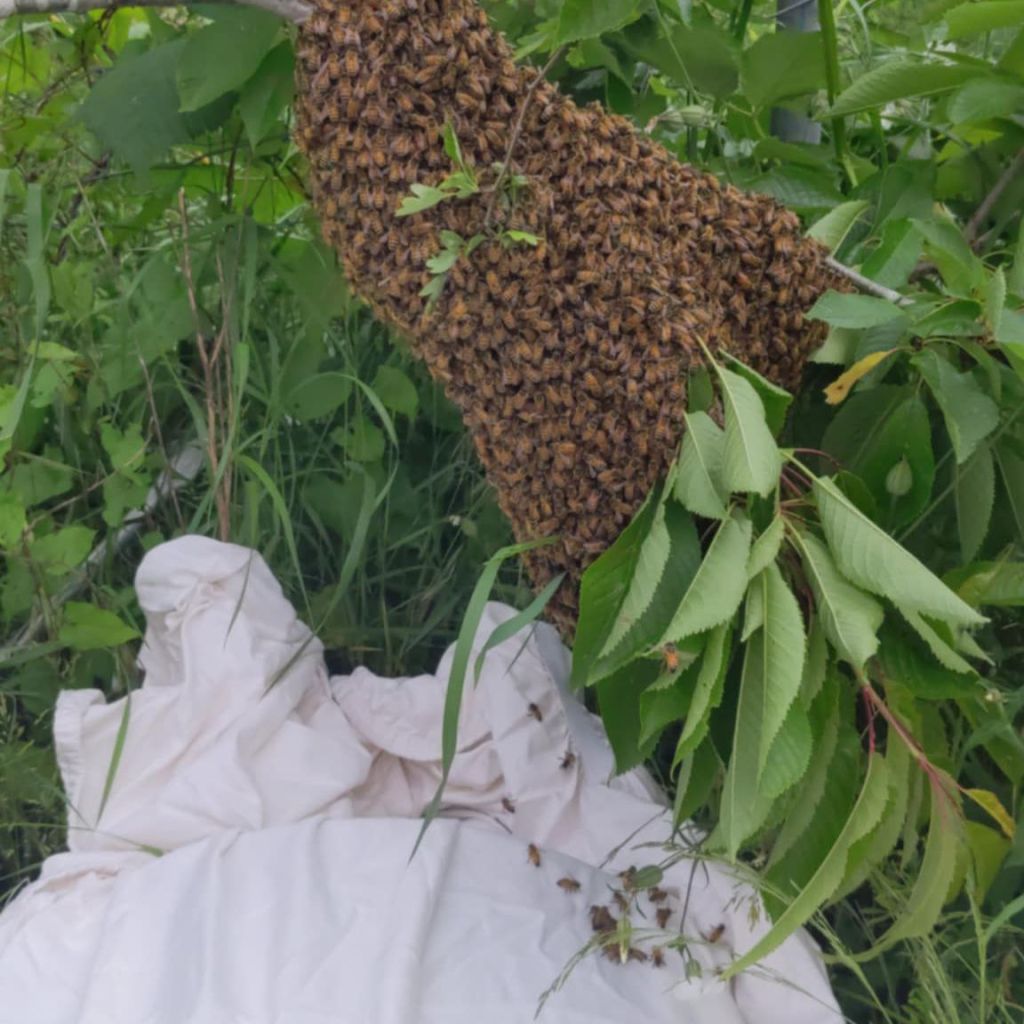
When I asked where she hopes to find herself in coming years as her business grows and eventually her dream is to host an educational space, inspired by The Honeybee Centre in Fraser Valley which invites school tours to visit the bees. She would love to not only have bees but a place where children can come to learn other food security related skills like growing food, composting, and more. “It’s about teaching kids they can grow something, they can tend to something, they can work hard for something and reap the benefits of it.” I couldn’t agree with her more.
Want to get connected with people who are GROWING for a food secure future? Join our Facebook community Let’s Get Growing Canada! or stay in touch with my monthly newsletter.


 Garden Mama Growing
Leave a comment